Synopsis: The Doctor and Jamie discover they’ve acquired a stowaway – Zoe, the young astrophysicist they met on the Wheel space station. Zoe is determined to join the travellers in the TARDIS, but the Doctor believes it only fair to warn her of the kind of dangers she might face. He weaves a narrative of one of their previous adventures and projects it into Zoe’s mind. A story in which Jamie’s faith is tested and the Doctor is forced to work for his deadliest enemies, the Daleks.
Chapter Titles: A prologue, epilogue and 17 numbered chapters.
Background: Credited to Frazer Hines, with help from Steve Cole and Mike Tucker, this is an abridged version of the longer hardback book published in 2023. Rather than simply adapting the scripts from David Whitaker’s 1967 story, this incorporates material from the 1968 repeat version, plus the final scene from Whitaker’s The Wheel in Space. This edition was released as a free gift alongside Doctor Who Magazine issue 609.
Notes: A prologue is told from Jamie’s viewpoint and adapts the final scene from The Wheel in Space. The quest to locate the TARDIS is heavily truncated, with Chapter One beginning at Waterfield’s shop. Maxtible knew Kemel when he was a wrestler in London’s East End; he offered the Turk lodgings in a small cottage on his land. Kemel performed menial tasks within the grounds to pay his way. It’s stated that Maxtible planned to use Kemel in the Daleks’ series of trials for Jamie.
Contributions from Kennedy, Perry, Ruth Maxtible, Arthur Terrall and Toby are completely excised; some of these absences are explained away in the epilogue (which is also told from Jamie’s point of view). The epilogue consists of entirely new material, concluding with a line paraphrased from The Dominators: ‘It’s quite taxing, mental projection, y’know.’
Cover: Dan Liles, who took over from Anthony Dry with The Church on Ruby Road, creates a painting of a dramatic scene, with Jamie and Victoria looking on as the Troughton Doctor stands proudly in the Emperor’s control room surrounded by Daleks. In keeping with past Target covers (Day of the Daleks and Dalek Invasion of Earth) the Daleks are flipped so their arms are the wrong way round – a shame as otherwise it’s a beautiful piece of artwork.
Final Analysis: While John Peel’s The Evil of the Daleks was the final TV novelisation of the original run, it was published by Virgin Books, so technically this new adaptation is a first for the Target range. It’s much more in the style of old Target books, economical and fairly linear apart from the intro and outro chapters. Sometimes, the simplicity is to the benefit of the story, skirting over some of the gaps in the narrative that were present in the televised story (such as why the Waterfields have such a presence in Maxtible’s house). As a side-step – and as a freebie for DWM – this is a nice piece of whimsy, but it doesn’t come close to the quality and richness of John Peel’s approach. As an abridgement of the longer hardback, it also loses most of the point-of-view material that justifies having Frazer Hines’ name on the cover. It’s a decent retelling of the TV story though, while still leaving room for the curious reader to approach either of the other, longer versions previously available.
The mission for this blog was simply to read all of the Target books of the original range. Since 2018, BBC Books has continued the tradition of mixing reprints with new novelisations – some adapted from existing full-length novels, some specially commissioned to cover a selection of stories broadcast since 2005. Like the original intentions of the Target range right at the start, there doesn’t seem to be any desire to create an exhaustive library of novels covering every single story from the 21st Century. With that in mind, and having reached the final novel in a (now) unbroken run of adaptations, it seems that this is the appropriate place to bring this blog to a close.
Just for completion’s sake, here’s a list of the volumes added to the Target range featuring the Doctors who we’ve met this century. The books from Rose through to The Giggle have Achilleos-style covers by Anthony Dry, while those from The Church on Ruby Road onward have more photorealistic composition created by Dan Liles.
163. Doctor Who – The Christmas Invasion
Jenny Colgan adapts Russell T Davies’ scripts from 2005. Yes – scripts, as this novelisation spans three stories! The regeneration scene from Parting of the Ways leads into the Children in Need mini-episode – aka The Pudsey Cutaway – before launching into the feature presentation, an adaptation of Russell T Davies’ script for the 2005 Christmas special. It’s suggested that the Doctor’s Estuary accent may be due to Rose’s influence and that elements of the Hitch-Hiker’s Guide to the Galaxy other than Arthur Dent also exist in the Doctor’s universe. Aside from the Prologue and Epilogue, the chapter titles all come from Christmas songs.
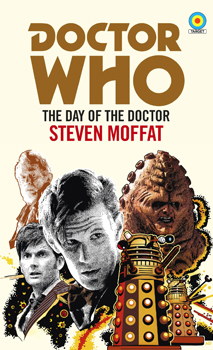
164. Doctor Who – The Day of the Doctor
Steven Moffat very loosely adapts his scripts for the 2013 anniversary special and the mini-episode Night of the Doctor. Each chapter is told from the point of view of a different character with the overall story narrated by… the Curator! Apparently the first two Doctors were colour-blind, something they only discovered when he became the Third Doctor. The two 1960s Dalek movies exist as films within the Doctor’s universe. The Ninth Doctor smashed every mirror in his TARDIS as a reaction to his predecessor’s actions in the Time War. He also took aboard a therapy robot, which River Song later used to help the Eleventh Doctor forget how many children died on The Final Day. The Twelfth Doctor plays an active part in proceedings, installing himself in the War Room on Gallifrey.
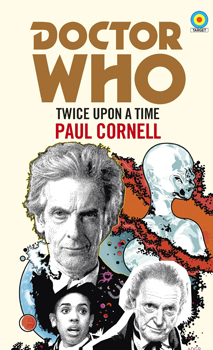
165. Doctor Who – Twice Upon a Time
Paul Cornell adapts Steven Moffat’s script for the 2017 Christmas Special. We’re told a little more about Nardole’s life (and death), we learn that the Doctor has a collection of VHS tapes of his old adventures (he laments that The Daleks’ Master Plan is missing) and the first Doctor repels an attack of Dalek mutants by using a sonic screwdriver.
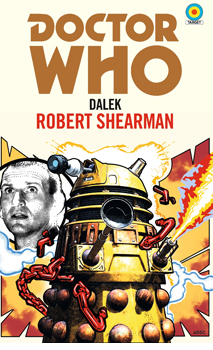
166. Doctor Who – Dalek
Robert Shearman adapts his own script for the 2005 episode, with sidesteps and chapter-long short stories inspired by the supporting characters. The torturer Simmons has adopted a new identity to escape his past crimes, while Goddard is an undercover security agent who arrests Van Statten at the end. The Dalek’s backstory is also explained, including an encounter with the War Doctor.
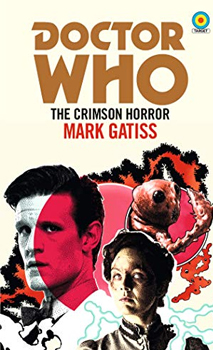
167. Doctor Who – The Crimson Horror
Mark Gatiss adapts his own story from 2013, narrated mainly by Jenny, with additional viewpoints from Strax, Jonas Thursday and the Doctor. We’re offered an ‘origin story’ for how Jenny and the Doctor first met (although this is at odds with what we’re told in The Name of the Doctor) and the Doctor gives perception filters to Strax and Vastra to help them pass unnoticed in London.
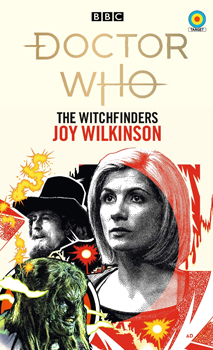
168. Doctor Who – The Witchfinders
Joy Wilkinson adapts her own script for the 2018 episode, beginning with a new sequence that explains how the Morax came to be imprisoned on Earth. There’s additional backstory for Becka and Willa, while Willa is revealed to have survived the later Pendle Witch trials thanks to the Doctor’s intervention, as well as an unexpected connection with Clara and Me / Ashildr.
169. Doctor Who – The Fires of Pompeii
James Moran adapts his own story from 2008. A prologue describes a race of beings who are trapped beneath the soil of a planet; though their bodies fragment into dust over thousands of years, their consciousnesses survive and they discover that they can influence the primitives of the planet, who worship them as gods. The chapter titles are not just in Latin, but they’re puns too – shades of The Myth Makers. On first sight of a Pyrovile soldier, the Doctor speculates it might be a Krarg [from Shada]. We’re told of just some of the escapades Donna experienced before reconnecting with the Doctor (including ‘KebabGate’). The Doctor takes issue with Donna’s misuse of the phrase ‘deus ex machina’.
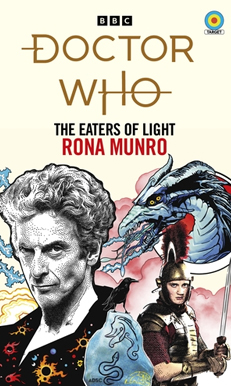
170. Doctor Who – The Eaters of Light
Rona Munro adapts her own story from 2017, with the story divided into three ‘books’, each subdivided into chapters (eighteen in all, plus a prologue, epilogue and Author’s Note). Nardole is distressed by the bet between the Doctor and Bill; he’d hoped for ‘a day off’ and had lined up a box set and popcorn. Bill witnesses the creature slaughtering the prized bull of Kar’s tribe before fleeing the scene and meeting Simon. The second book tells the backstory of how Kar became the gatekeeper and when Lucius ran away from home to join his legion. The framing scenes of the girl discovering the music in the stones is missing, as is the final sequence involving Missy.
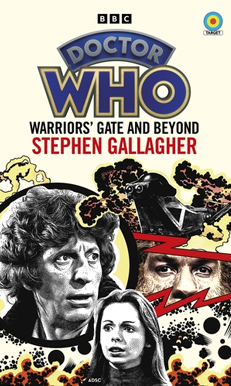
– Warriors’ Gate and Beyond
Not technically a new book like the David Fisher novels, but an expanded version of the original Target novel using Stephen Gallagher’s original manuscript before John Nathan Turner insisted on edits. The book also includes two short story sequels.
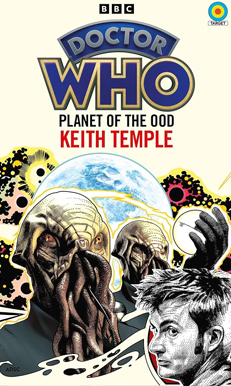
171. Doctor Who – Planet of the Ood
Keith Temple adapts his own story. A prologue describes the awakening of the ood that Donna and the Doctor later find dying in the snow. We meet some of the reps who have athered for a sales conference. Ood have suckers on their hands and feet, which is how they cling to the ceilings to attack the reps.
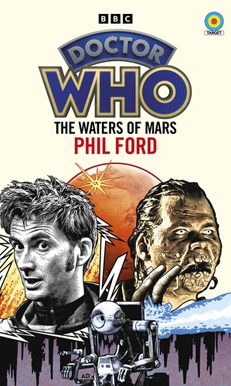
172. Doctor Who – The Waters of Mars
Phil Ford adapts his own story. A prologue describes the patient entity that waits within the water. The Doctor’s spacesuit is the same one he acquired during his visit to The Satan Pit. We’re told that Adelaide is 60 years old and a flashback describes the night she lost her parents but encountered the Dalek that chose to save her. The Ice Warrior empire is referenced as the Doctor translates a final message from a long-dead Martian Lord.
173. Doctor Who – Kerblam!
Pete McTighe adapts his own story. We learn that Judy Maddox lost her parents during a protest against automation. The Doctor befriends the company AI mainframe and is able to reboot it using the AI housed in the earliest Kerblam! man, which she finds in the Kerblam! museum. A flashback reveals that a young Judy escapred the riot that killed her parents with the help of a man and woman who are probably a past Doctor and companion.
174. Doctor Who – The Zygon Invasion
Peter Harness adapts the story he co-wrote with Steven Moffat. A recap of The Day of the Doctor leads into the story. The word ‘skarasen’ is used to mean ‘parent’. The majority of the Zygons were hatched on Earth and are only two years old, regardless of their outward appearances. A flashback to Bonnie’s arrival in Truth or Consequences reveals she had a companion called Clyde who might have taken the form of Danny Pink. When Clyde dies, Bonnie blames the Doctor.
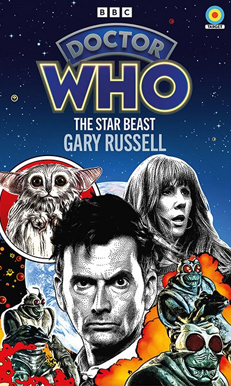
175. The Star Beast
Gary Russell adapts Russell T Davies’ scripts for the first of the 2023 specials. A factory worker called Stew Fergusson is our viewpoint for some early scenes; it’s suggested he was the milkman at the beginning of The Stolen Earth. Fudge has a friend called Shazza – aka Sharon Allen – and a neighbour called Mrs Higgins, both referencing characters from the comic. A UNIT memo reveals that Shirley reports to senior scientific advisor Malcolm Taylor (Planet of the Dead), while a memo from the Shadow Proclamation explains the origins of the genetically modified species the Wrarth Warriors. Oh and continuing a long Target tradition, the Doctor is said to have blue eyes!
The author’s acknowledgements at the back of the book include a tribute to friends who have died in the last few years. A note from cover artist Anthony Dry reveals that the covers for these specials will be his final contributions to the range.
176. Wild Blue Yonder
Mark Morris adapts Russell T Davies’ scripts for the second 2023 special and presents almost all of the chapter titles as a countdown, written in the language of the equine species.
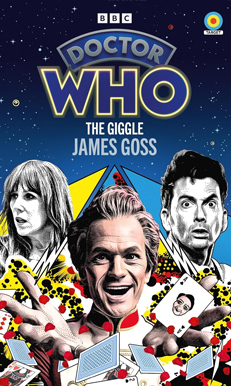
177. The Giggle
James Goss adapts Russell T Davies’ scripts for the third 2023 special – and tears up the rule book. The Doctor’s recent post-regeneration adventures in the pages of Doctor Who Magazine and the Children in Need special are referenced. Kate remembers her father’s tales of ‘Gel guards. Axons. Devil Goblins from Neptune’ (the latter being a nod to the BBC past-Doctor book of the same name by Keith Topping and Martin Day). We’re also told of an unseen encounter between UNIT and the Krotons. The aspect of games is brilliantly played out, initially with a variety of puzzles, including a maze made from the US President’s brain. The chapters are listed as ‘Moves’ (‘Move 1’, ‘Move 2’ etc), the purpose of which is revealed when the book becomes a Fighting Fantasy-style adventure. Easily slipping into the top ten Target books of all time, it’s also unquestionably the most inventive.
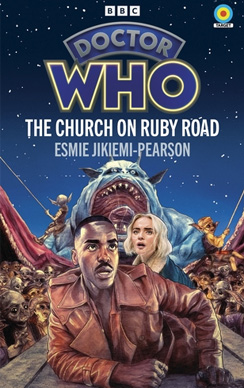
178. The Church on Ruby Road
Esmie Jikiemi-Pearson adapts Russell T Davies’ scripts for the 2023 Christmas special in a fairly straightforward novelisation.
179. Doctor Who: Space Babies
Alison Rumfitt adapts Russell T Davies’ script for the 2024 episode. The opening chapter contains some of the most beautiful writing in any Target novel.
180. Doctor Who: 73 Yards
Scott Handcock adapts Russell T Davies’ script for the 2024 episode, successfully building on the mystery of the original and providing a few useful hints as to how the story comes about without being too conclusive. Handcock takes time to build credible backgrounds to the regulars in the pub, adding to the feeling of menace in the scene.
181. Doctor Who: Rogue
Kate Herron and Briony Redman adapt their own script for the 2024 episode. The novel opens with a cold open depicting a past case for Rogue and his partner Art that narrowly avoids being a mere Douglas Adams pastiche. The smart use of flashbacks provides welcome backstory for Rogue and a potted history of the Chuldur race.
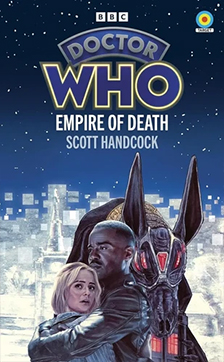
182. Doctor Who: Empire of Death
Scott Handcock adapts early drafts of Russell T Davies’ 2024 scripts to bring us extra scenes and a greater insight into the story – including a fuller explanation of Sutekh’s motivations than either Russell, Terrance Dicks or indeed Robert Holmes ever did.
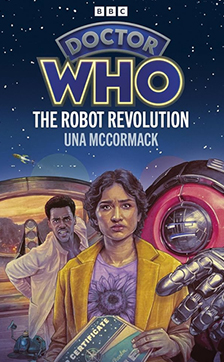
183. Doctor Who: The Robot Revolution
Una McCormack adapts Russell T Davies script for the 2025 adventure, expanding on the backstories of the principal inhabitants of Misbelindachandraville.
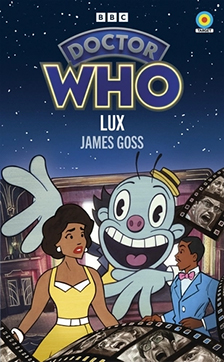
184. Doctor Who: Lux
James Goss adapts the 2025 episode by Russell T Davies. As with The Giggle, this novelisation plays with formatting and presentation to capture the sheer craziness of the broadcast story, as well as expanding upon the backstory of three specific characters in quite a beautiful way.
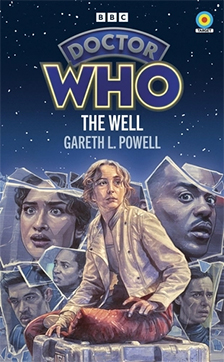
185. Doctor Who: The Well
Gareth L Powell adapts the 2025 script by Russell T Davies and Sharma Angel-Walfall, with additional personnel records for the main characters.









 Escape to Danger